
FEMINIST PULSE
Female Bodies Across Centuries, Stretched and Shrunk By Patriarchy
For centuries, there has been an extraordinarily consistent global push to take the female body, make it smaller, slower, and structurally incapable of defending itself.
China, from roughly the 10th century through the early 20th century
Foot binding, the atrocious practice of binding women’s feet, began in the Song dynasty; to this day, it is a near-universal practice spanning elite and working-class families. Young girls between the ages of four and seven had their feet folded and bound until the arch disappeared and toes curled inward permanently. The objective was to attain a so-called “lotus foot” – a shape cherished for its smallness- that inadvertently forced an unstable gait. Let alone the fact that a woman with bound feet could never run, she couldn’t even walk without support. This practice was made compulsively aspirational.
Europe, 16th century to early 20th century, under the cloud of Victorian England.
What foot binding achieved with cloth, the corset did with steel. Corsets restructured the internal anatomy of a woman’s body in search of some “aesthetic” rather than her ability to breathe or move. Tightlacing results in reduced lung capacity, displaced organs, and frequent fainting bouts. “Vapours” – the period’s oft-used term for fainting, breathlessness and lightheadedness, mostly blamed on women’s “nerves” rather than the steel crushing her ribs – became an acceptable condition even as the body was revolting against the clothes.
Japan, through the Edo period (1603-1868) and its aftermath.
The traditional kimono – bound tightly at the waist with a deliberately restrictive and narrow stitch – was developed to produce shuffling, short steps. Considered an iconic cultural reference even today, the silhouetted woman in Japan’s cultural marketing, incapable of moving. She is shown to be paired with the Geta sandals, adding to the instability.
Myanmar and Thailand – ongoing for centuries.
Brass neck rings added from childhood incrementally push the collarbone down, creating an illusion of an elongated neck. Marketed as “tradition”, conveniently ignoring the dangers of wearing them, as well as removing the rings after years.
We no longer need to resort to these methods in the present day, all we need to do is give a girl a phone, the algorithm will do the rest. The girl, completely oblivious of being preyed upon, will smile through the process by calling it self-improvement.
The Modern Warfare On Female Bodies
Starvation has been duly rebranded
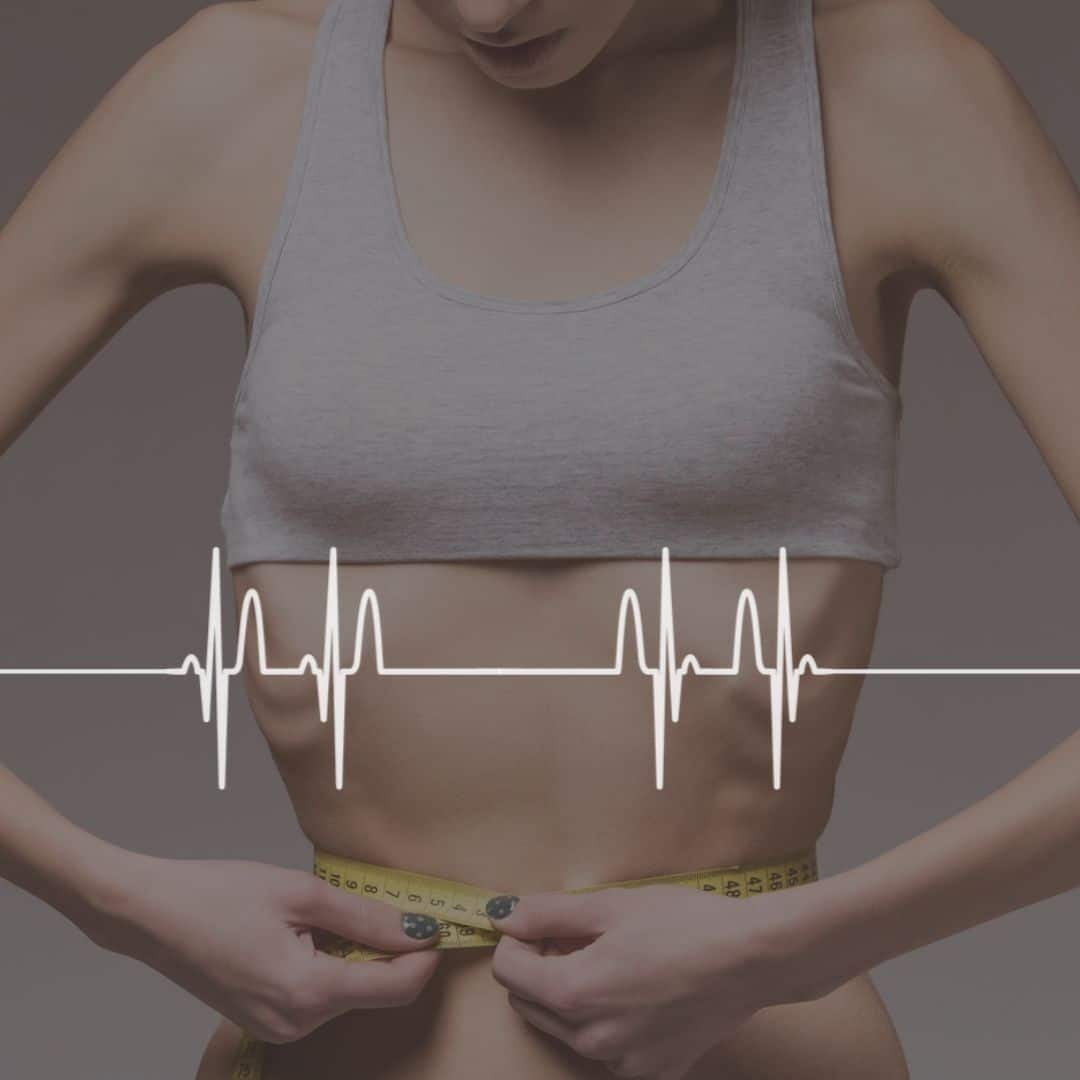
A pro-thinness culture never truly went out of fashion despite the “heroin chic” in the nineties being deemed so dangerous. It briefly went underground, and emerged as “wellness” routines. What an eleven year old girl holds in her phone is a curated collection of algorithmically designed visuals made to want a body smaller than hers: this includes thigh gaps, ribs that are pointing out, and more. Her posts would be replete with efforts to skip meals, track calories, but reframed as “what I do in a day” that she hopes gets piled in likes and comments. While the foot binding promised women marriage, algorithm curation makes girls chase relevance. And there is not a lot of difference between the two, and across generations, women paid the same price: a body made incapable of existing without pain, and tolerance of said pain being rewarded as doing the right thing. Anorexia has the highest mortality rate amongst all psychiatric disorders killing an estimated five in every one hundred patients within the first four years. This risk goes up by eighteen times the average rate of suicide for women who were diagnosed in their twenties. Across Europe, studies held on 300,000 eating disorder patients have recorded the deaths of nearly 6,000. The only tragic aspect of this slow deterioration is that, foot binding in the 1800s injured a handful of children, but one trending video today would brainwash millions of girls before you could say “foot binding!”
The surgical conveyor belt
For anyone who manages to slip away from digital grooming, where starvation can’t be brought out of our bodies, the ever-growing market offers to chop it into a desirable shape instead. And of course to make said chopping as “empowering” and “a choice.” The Brazilian Butt Lift (BBL) is, by far, the most dangerous cosmetic procedure performed anywhere, that even surgeons have warned about its risks. The fat injected into the buttocks could reach a blood vessel and can cause a deadly pulmonary embolism. And cause Sepsis and Necrosis in non-surgical procedures.
Tamara Celeste Tuinfort, a young Dutch woman died two days after her BBL procedure was done in Turkey. The bereaved mother filed a lawsuit against the hospital for negligent homicide and manslaughter. After the death of Alice Webb, now the subject of a manslaughter investigation in the UK, Director Ashton Collins said her organisation ‘Save Face’ had supported 500 women who had suffered complications from the procedure. “They are advertised on social media as ‘risk-free’, ‘cheaper’ alternatives to the surgical counterpart and that could not be further from the truth.” Ms. Collins said.
BBL is marketed to women in their twenties (or even earlier these days) on the same social media platforms that also speak of fitness and weight loss. Another item in the list is the Lip Filler that is seen as some form of coming of age rite of passage among young women. Several others like the buccal fat removal, fox-eye lifts, and “Instagram face” which is an existing industry term – a whole such gamut of surgeries exist that reduces the face (and the body) to a mere filter.
Cutting off womanhood
When you have had enough propaganda being screamed at from every corner of the world, you realise being a woman is in itself a burden. The growing number of young girls, who, in the name of chasing an identity, bind their chests flat with compression garments that could crack ribs and collapse lungs, only to take it further by paying for a mastectomy. Marketed not as a breast removal surgery, but as “gender-affirming care”, as a step closer to reaching their “transgender” identity. Try and find out why, the answers can never be medically corroborated. In Finland, the referrals to the gender clinics surged so steep after their 2011 protocol that even clinicians flagged this abnormal pattern. The new patients seeking the service were predominantly teenage girls with two thirds of them having a documented history of serious psychiatric illness. A national study that followed every gender clinic referred young person from 1996-2019 revealed that among girls who had masculinising hormones or surgery, the rate of severe psychiatric illness needing specialist treatment rose from 21.6% to 54.5% – the exact opposite of what these “gender affirming” procedures were supposed to deliver. A Finnish clinic that specifically researches detransition found young women “regretting” their decision at around 7 years from diagnosis, by which time several of whom would have already gone down the non-reversible journey. Every single woman described their regret as major and acute, never minor.
The common thread
There is no closing time for this ordeal. There can never be a time where the garment/corset/binder comes off, and the body is simply left alone to exist. To make matters worse, for many young women, the damage becomes too irreversible for it to “come off”.
The bandage, the bone crushing, the brass rings, and now the double mastectomies – each one is just following the same model in propagating misogyny across the centuries.
“It’s in the past. Move on!”
Is it really in the past? Or have we merely outsourced it to modern-day contraptions? Of course, a modern woman is not wearing steel anymore; she doesn’t need to because she will happily strap herself into a painful pair of pointed heels that reshape her Achilles tendon. In contemporary society, we have replaced steel boning with shapewear, so it also looks “aesthetically pleasing” in a marketing handout. Young women now will book a filler appointment during their lunch break, boast about saving for a surgery with a documented high death rate, or some would bind their ribs preventing her from taking a single full breath, or pay to have a healthy tissue cut away permanently from her. All these women will argue endlessly about having made these choices according to their own free choice, and that nobody forced them into it. Sadly, nobody had to. All these Frankensteinian alterations are announced as a glow up, a “girl boss” investment in herself, and all the things we pitied our great-great-grandmothers for, we are queueing up for our own downfall.
The corset, as we know it, has always been around. Just with a virtual pair of hands to tighten it until it sucks the life out of us. And until we see it for what it is, women will continue to uphold the delusion that this is, indeed, a choice.